Lifting Gloves: Are They Really Worth It for Your Workouts?
Disclosure: This post contains affiliate links. If you make a purchase through these links, I may earn a small commission at no extra cost to you.
Are lifting gloves really worth it? For most people, the answer is a qualified yes, but only if they solve a specific problem you're having. I used to think gloves were just for show, but after years of lifting, I've come to appreciate that some form of hand protection can genuinely enhance your training. Whether it’s preventing painful calluses, improving grip security on heavy lifts, or simply making your workout more comfortable, the right hand gear can remove friction and help you focus on your form. However, not everyone needs them, and there are different solutions depending on your goals. Let's break down if adding some hand protection to your gym bag makes sense for you.

Why Do People Use Lifting Gloves (And Why Do Others Skip Them)?
The Argument For Hand Protection
The primary reasons lifters reach for gloves, grip pads, or chalk usually boil down to comfort and performance. First, hand protection significantly reduces the friction between your hands and the bar, which means fewer painful calluses and blisters. This might seem minor, but if you've ever had a torn callus mid-workout, you know how disruptive and painful it can be. Second, certain types of protection, especially chalk or specialized grip materials, can dramatically improve your grip, helping you hold onto heavier weights for longer. This is particularly useful for deadlifts, rows, and pull-ups where grip often fails before the target muscles do. Finally, for some, the added padding simply makes the lift more comfortable, allowing them to push harder without hand discomfort being a limiting factor.
The Case Against Gloves
On the flip side, many serious lifters, myself included for a long time, prefer to go barehanded. The main argument against gloves is that they can reduce tactile feedback, making it harder to 'feel' the bar and potentially affecting form. There's also the school of thought that training without gloves naturally strengthens your grip and toughens your hands, which is a desirable adaptation. Some feel gloves can actually worsen grip strength over time by outsourcing the work your hands should be doing. And let's be honest, for many, it's just a preference for simplicity—fewer things to carry, fewer things to worry about.
What Are Your Options for Hand Protection?
When it comes to protecting your hands in the gym, it's not just about traditional gloves. There's a spectrum of options, each with its own benefits and drawbacks. Here's a quick comparison of the most common types:
Comparison: Gloves vs. Grip Pads vs. Chalk
| Feature | Traditional Lifting Gloves | Grip Pads/Gym Paws | Gym Chalk (Block/Liquid) |
|---|---|---|---|
| Primary Benefit | Callus prevention, some padding | Callus prevention, minimal bulk | Enhanced grip, moisture absorption |
| Grip Improvement | Minimal to moderate (can sometimes be worse with cheap materials) | Moderate | Significant |
| Callus Prevention | High | High | Low (prevents slips, not direct friction) |
| Tactile Feedback | Low | Moderate to High | High |
| Bulk/Portability | Moderate | Low | Low (liquid chalk is best for portability) |
| Durability | Varies greatly by material | Moderate | Consumable |
| Best For | General comfort, preventing blisters | Quick transitions, those who dislike full gloves | Heavy lifting, maximizing grip strength |
Basic Weightlifting Gloves
These are the most common type you'll see. They typically cover the palm and sometimes have half-fingers. They offer a good balance of callus protection and some degree of comfort. Look for durable stitching and breathable materials.
Pros:
- Good for preventing calluses and blisters.
- Offers some padding for comfort.
- Relatively inexpensive.
Cons:
- Can reduce tactile feedback.
- May not significantly improve grip; some materials can even make it worse if slippery.
- Can feel bulky or hot.
Lifting Gloves with Integrated Wrist Wraps
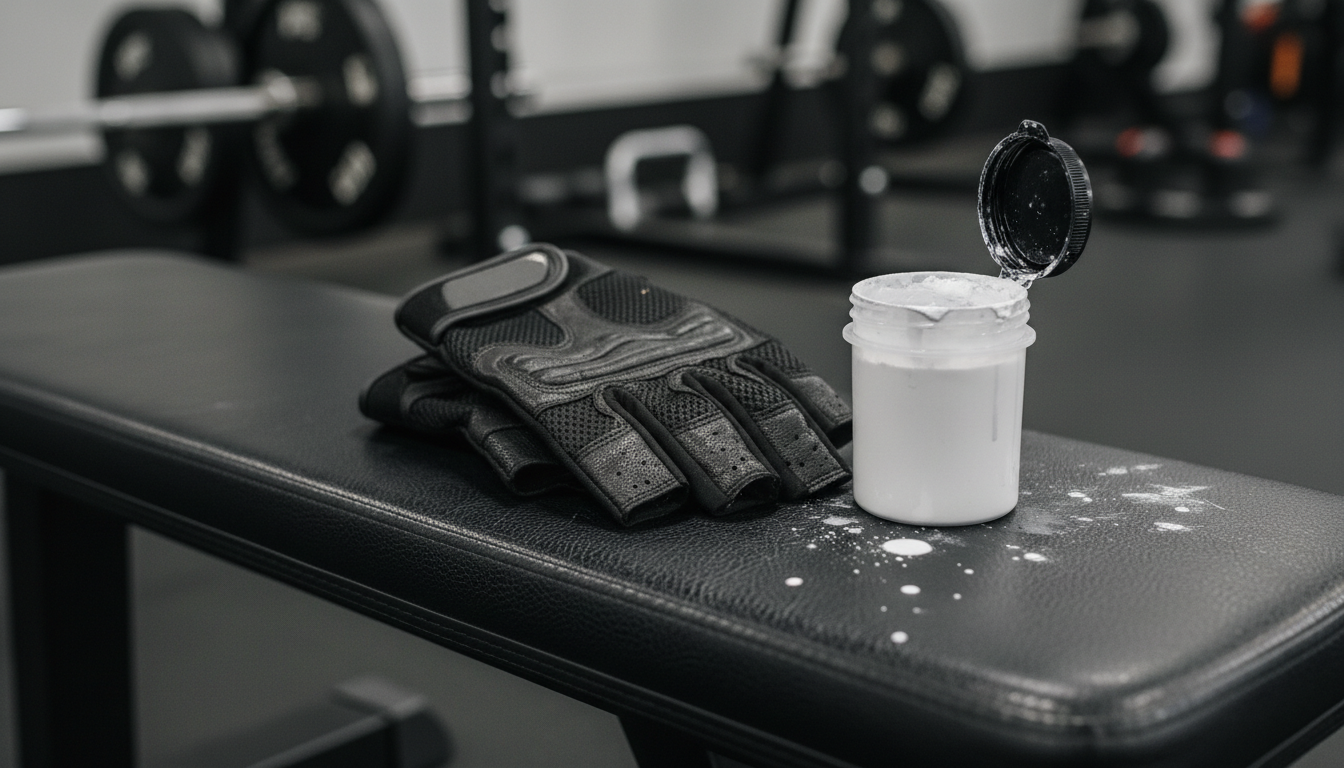
If you're lifting heavy and feel discomfort or instability in your wrists, these combine the benefits of palm protection with wrist support. The integrated wraps help stabilize the wrist joint, which can be crucial for presses and overhead movements.
Pros:
- Combines hand protection with wrist support.
- Can aid in heavier pressing movements and reduce wrist strain.
Cons:
- More expensive and bulkier than basic gloves.
- Wrist wraps can sometimes be restrictive for certain movements.
- Might encourage over-reliance on wrist support rather than building natural wrist strength. For just wrist support, consider dedicated gym wrist wraps.
Silicone Grip Pads (or 'Gym Paws')
These are an interesting middle ground. They are usually small, silicone or neoprene pads that cover just your palm. They offer callus protection without covering your fingers, maintaining more tactile feel than full gloves.
Pros:
- Excellent callus protection for the palm.
- Better tactile feedback than full gloves.
- Minimal bulk, easy to take on and off.
Cons:
- Don't offer finger protection.
- Can sometimes shift or bunch up during a lift.
- May not provide significant grip enhancement.
Gym Chalk (Block or Liquid)
Chalk is the go-to for serious lifters focused purely on maximizing grip and minimizing sweat. It absorbs moisture and increases friction, providing a much more secure hold on the bar. Liquid chalk is great for gyms that don't allow traditional block chalk mess.
Pros:
- Superior grip enhancement.
- Maintains full tactile feedback.
- No bulk, feels natural.
- Liquid chalk is less messy than block chalk.
Cons:
- Does not protect against calluses (in fact, it can sometimes exacerbate them if hands are already rough).
- Can be messy (block chalk).
- Requires reapplication. I keep liquid gym chalk in my bag.
How to Choose the Right Hand Protection for You
When deciding, consider these factors:
- Your Primary Problem: Are you mostly dealing with calluses and discomfort? Or is grip strength the limiting factor on your heavy lifts?
- Type of Lifting: For general fitness and comfort, basic gloves might be fine. For heavy deadlifts and pull-ups, chalk is usually superior. If you need wrist support, look for integrated wraps or separate wrist wraps.
- Gym Rules: Some commercial gyms restrict messy block chalk. Liquid chalk is usually a good compromise.
- Personal Preference: Ultimately, what feels best and allows you to perform optimally is key. Don't be afraid to try a few different options.
My Recommendation for Most Lifters
For the average gym-goer looking for a practical solution, I recommend either basic weightlifting gloves for comfort and callus prevention or liquid gym chalk for grip enhancement on heavy lifts. If you're newer to lifting or just want to avoid hand discomfort, a simple pair of well-fitting gloves will do the trick without overcomplicating things. If you're progressing to heavier weights where grip starts to fail before your muscles do, liquid chalk is a game-changer. I personally use liquid chalk for my heaviest pulling days (like deadlifts and heavy rows) and go barehanded for everything else to keep my hands tough.

Don't feel pressured to buy anything you don't need. Start by identifying if hand discomfort or grip is actually holding you back. If it is, then one of these solutions can definitely be worth the small investment to keep you training consistently and comfortably.