The Only Kettlebell Buying Guide You'll Ever Need
Disclosure: This post contains affiliate links. If you make a purchase through these links, I may earn a small commission at no extra cost to you.
Kettlebells are one of the most versatile and effective pieces of equipment you can add to your home gym or take to the park. Forget racks of dumbbells – a single kettlebell, or a small set, can unlock full-body strength, cardio, and mobility benefits. But with so many types and weights out there, picking the right one can feel like a guessing game. This guide cuts through the noise, helping you understand the key differences between cast iron, competition, and adjustable kettlebells, so you can confidently choose the perfect tool to elevate your fitness journey.

Why Should You Consider a Kettlebell for Your Workouts?
If you're looking for efficiency, a kettlebell delivers. Unlike traditional dumbbells, their unique shape shifts the center of gravity, making exercises like swings, cleans, and snatches incredibly dynamic and effective. You'll build explosive power, endurance, and strength simultaneously. They're also fantastic for improving grip strength and stability. For anyone with limited space, a kettlebell is a compact powerhouse, offering a huge range of exercises in a tiny footprint.
What Are the Different Types of Kettlebells?
While they all serve a similar purpose, kettlebells come in a few distinct varieties, each with its own advantages. Understanding these differences is key to making the right choice for your training style and goals.
Cast Iron Kettlebells: The Classic Workhorse
These are what most people picture when they think of a kettlebell. They're made from a single piece of cast iron and often have a durable powder-coat finish. The handle thickness can vary slightly between brands, and the overall size of the bell usually increases with weight. They are rugged, reliable, and excellent for general strength and conditioning.
You can find a wide range of these by searching for cast iron kettlebells on Amazon.
Competition Kettlebells: Precision and Consistency
Favored by athletes who compete in Girevoy Sport (kettlebell sport), these kettlebells are all the same physical size, regardless of weight. This means the handle dimensions and overall bell dimensions remain constant, providing a consistent feel across different weights. They are typically made from steel, often with a smooth, unpainted handle for better chalk adherence.
For those focused on advanced techniques and consistency, competition style kettlebells are the way to go.
Adjustable Kettlebells: Space Savers
If space is a premium or you want to progress in weight without buying multiple bells, an adjustable kettlebell is a fantastic option. These allow you to add or remove plates to change the total weight of the kettlebell. They're usually more expensive than a single fixed-weight kettlebell but can save money and space in the long run by replacing an entire set.
Consider an adjustable kettlebell if versatility and compactness are your priorities.
Vinyl or Neoprene Coated Kettlebells: For Floor Protection
Some kettlebells come with a vinyl or neoprene coating. These are often filled with concrete or a sand mixture rather than solid iron, making them generally less durable for high-impact use. However, the coating can protect your floors and reduce noise, making them suitable for light home workouts, especially if you're not doing intense ballistic movements.
Kettlebell Type Comparison
| Feature | Cast Iron | Competition | Adjustable | Coated (Vinyl/Neoprene) |
|---|---|---|---|---|
| Material | Solid Cast Iron | Steel | Cast Iron/Steel with plates | Concrete/Sand fill, Vinyl/Neoprene coating |
| Size | Increases with weight | Constant across all weights | Larger than fixed bells, constant | Increases with weight |
| Handle Finish | Powder coat, sometimes textured | Smooth, unpainted (for chalk) | Often textured or coated | Coated, generally smoother |
| Durability | Very High | High | Moderate to High (depends on mechanism) | Moderate (coating can tear) |
| Best For | General fitness, strength, ballistic exercises | Kettlebell sport, consistent technique | Home gyms, space-saving, progressive overload | Light home workouts, floor protection |
| Price | $$ | $$$ | $$$ (initially) | $ |

How Do I Choose the Right Kettlebell Weight?
This is arguably the most critical decision. Starting too heavy can lead to poor form and injury, while starting too light won't provide enough stimulus. Here's a general guideline for beginners:
- For men: Start with a 16 kg (35 lb) kettlebell for swings, and potentially an 8 kg (18 lb) or 12 kg (26 lb) for presses and technical work.
- For women: Start with an 8 kg (18 lb) or 12 kg (26 lb) kettlebell for swings, and a 4 kg (9 lb) or 8 kg (18 lb) for presses and technical work.
These are just starting points. If you're completely new to strength training, err on the lighter side. You can always progress! The key is to be able to maintain good form throughout your sets. If you find your form breaking down, the weight is too heavy.
What Features Should I Look For in a Kettlebell?
- Handle: Look for a smooth but not slippery handle. Powder-coated cast iron handles generally offer good grip without being too abrasive. If you plan to use chalk, a raw steel handle (common in competition bells) is ideal. Make sure your hands fit comfortably through the window with a little space.
- Balance: A well-made kettlebell should feel balanced in your hand. This is more apparent in competition bells designed for specific movements, but even cast iron bells should feel "right."
- Base: A flat base is crucial for exercises like renegade rows or when simply setting the kettlebell down without it wobbling.
- Construction: For cast iron, look for a single-piece mold. Welds can create weak points and an uneven surface.
Kettlebell Recommendations: My Top Picks
Classic Cast Iron Kettlebells: The Reliable Starter
For most people getting into kettlebell training, a standard cast iron kettlebell is the perfect entry point. They're durable, relatively affordable, and great for a wide range of exercises. Look for a brand known for good finish and consistent handle size within their product line.
- Pros: Excellent durability, traditional feel, wide availability, good grip for most users.
- Cons: Size increases with weight (can take up more space), handle finish can sometimes be inconsistent between brands.
Adjustable Kettlebells: The Smart Space-Saver
If you're tight on space or budget but want the ability to increase weight as you get stronger, an adjustable kettlebell for home gym use is an excellent investment. They condense multiple weights into one unit, making progressive overload simple without a dedicated rack.
- Pros: Saves space and money in the long run, easy weight changes, ideal for progressive training.
- Cons: Can be more expensive upfront, mechanical parts can sometimes be less robust than solid bells, usually larger overall dimensions than a single fixed bell of the same weight.
Kettlebell Storage: Keeping Your Space Tidy
Whether you have one bell or a growing collection, keeping your workout area safe and organized is important. A simple kettlebell storage solution can prevent tripping hazards and protect your floors and equipment. This could be a dedicated rack or even just a heavy-duty mat.
- Pros: Organizes space, prevents damage to floors/equipment, improves safety.
- Cons: Another piece of equipment to buy, takes up floor space.
My Simple Kettlebell Buying Guide Checklist
- Determine Your Starting Weight: Be realistic and err on the lighter side for learning new movements.
- Choose Your Type: Cast iron for general use, competition for consistency, adjustable for space/budget.
- Inspect the Handle: Smooth but not slippery, comfortable fit for your hands, no sharp seams.
- Check the Base: Ensure it's flat for stability during floor exercises.
- Consider Your Space: How many bells can you comfortably store?
- Read Reviews: Always check what others say about durability and finish.
Frequently Asked Questions About Kettlebells
Q: What's a good starting weight for a beginner?
A: For men, a good starting point for swings is often 16 kg (35 lbs), and 8-12 kg (18-26 lbs) for pressing movements. For women, 8-12 kg (18-26 lbs) for swings and 4-8 kg (9-18 lbs) for presses. These are general guidelines; always prioritize form over weight.
Q: Do I need more than one kettlebell?
A: Not necessarily to start. A single kettlebell can provide a fantastic full-body workout. However, as you progress, you'll likely want a heavier bell for lower body/ballistic movements (like swings) and a lighter one for upper body/skill-based exercises (like presses or Turkish Get-ups). An adjustable kettlebell is a great solution for this.
Q: Are kettlebells better than dumbbells?
A: Neither is inherently "better"; they're different tools for different jobs. Kettlebells excel at dynamic, ballistic movements and training multiple muscle groups simultaneously, building explosive power and endurance. Dumbbells are excellent for isolated muscle work, traditional strength training, and precise control. Many find a combination of both to be ideal.
Q: How do I care for my kettlebell?
A: For cast iron bells, a simple wipe-down with a damp cloth after use is usually sufficient. If you use chalk, brush off excess. To prevent rust, especially in humid environments, you can periodically apply a thin coat of a protective oil. Store them on a mat or rack to protect your floors and the bell itself.
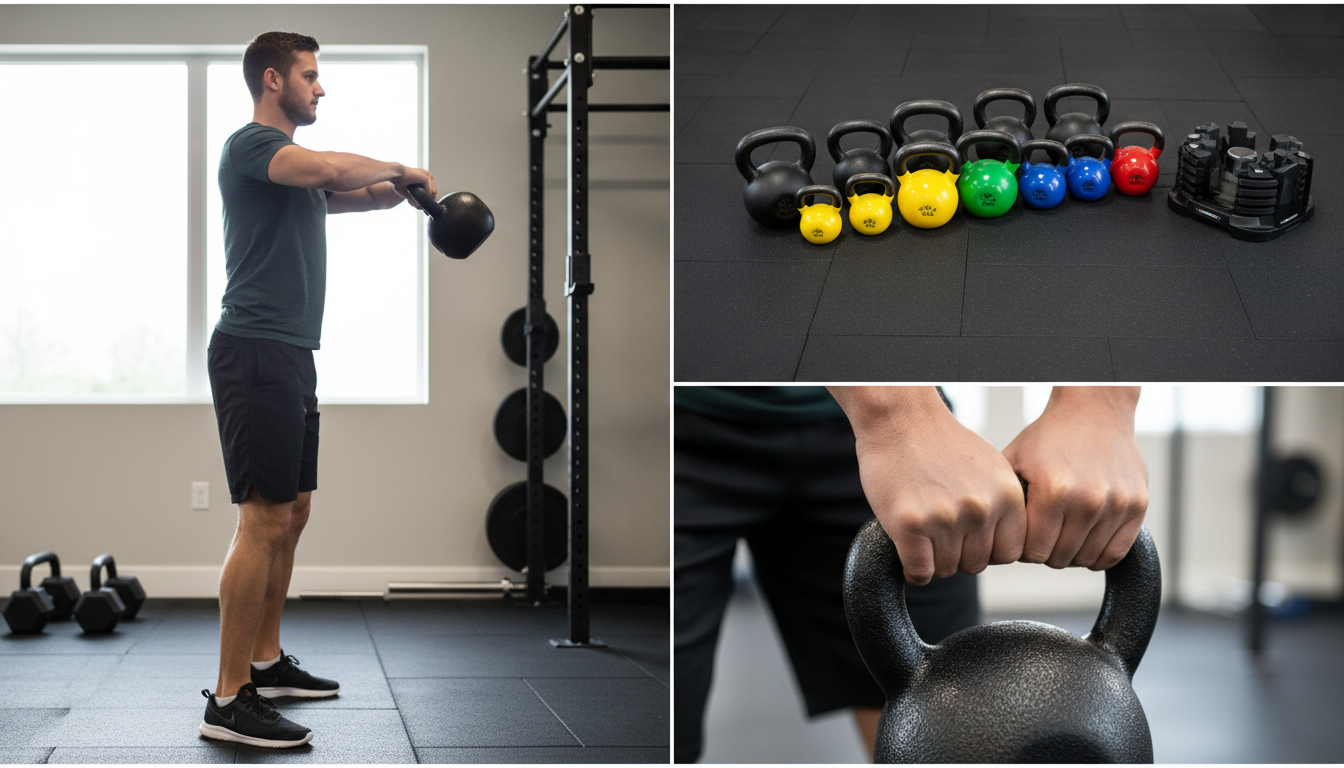
Choosing the right kettlebell doesn't have to be complicated. By understanding the types, selecting an appropriate starting weight, and focusing on key features like handle comfort and balance, you'll be well on your way to unlocking a powerful and efficient workout routine. Get swinging!