Are Adjustable Workout Benches Worth It for a Home Gym?
Disclosure: This post contains affiliate links. If you make a purchase through these links, I may earn a small commission at no extra cost to you.
If you train at home and want one piece of equipment that unlocks a lot of exercises, an adjustable workout bench is usually worth considering. It gives you more positions for pressing, rows, core work, and dumbbell training than a flat bench alone. But it is not the best pick for everyone. If your workouts are simple, your space is tight, or you mostly do floor-based training, a basic flat bench may make more sense. In this guide, I’ll break down when an adjustable bench earns its spot, what features matter, and how to compare options before buying.

What makes an adjustable workout bench worth buying?
The short answer is variety. A good bench lets you move from flat pressing to incline work without rebuilding your setup. That matters if you want a compact home gym that can support progressive training over time. If you’re browsing options, you can start by searching for an adjustable workout bench and comparing how each model handles positions, padding, and storage.
I think the best case for an adjustable bench is simple: you lift with dumbbells or a barbell at home, and you want your bench to keep up as your training changes. If that sounds like you, a bench is often more useful than adding another small accessory that only serves one job.
How do flat, incline, and FID benches compare?
Not every bench is built for the same kind of training. Here’s a quick comparison to help narrow the field.
| Bench type | Best for | Trade-off |
|---|---|---|
| Flat utility bench | Simple pressing, rows, and basic dumbbell work | Least versatile |
| Adjustable incline bench | Incline pressing and upper-body work | Usually fewer position options |
| FID weight bench | Flat, incline, and decline-style training | More moving parts and usually bulkier |
| Foldable exercise bench | Small spaces and easy storage | May sacrifice stability or pad size |
If you want the simplest upgrade from a flat setup, a flat utility bench is still a smart option. If you know you want incline work and more flexibility, an FID weight bench is closer to the all-in-one choice most home gym owners are after.
Which features should you look for before you buy?
When I shop for a bench, I focus on the boring stuff first. That is usually the difference between a bench that feels solid every session and one that becomes annoying to use.
What should you check in the frame and stability?
Look for a bench that feels planted when you sit down, set up dumbbells, and shift positions. A heavier frame often helps, but the real test is whether the bench stays steady under normal movement. If your floor is slick or uneven, a heavy duty weight bench may be worth the extra footprint.
How important is pad quality and adjustability?
The pad should support your back without feeling overly soft. For adjustable models, also check the range of angles and how easy it is to change positions. If the ladder or pop-pin system is awkward, you may stop using the settings that made the bench appealing in the first place.
Do foldable benches make sense?
Yes, if space is the deciding factor. A foldable exercise bench can be a strong fit for apartments, multipurpose rooms, or anyone who wants to stow the bench after training. Just make sure the storage convenience does not come at the expense of comfort or stability.
Which bench is best for your training style?
Here is the practical version: choose the simplest bench that still supports the way you actually train.
- Choose a flat bench if you mostly press, row, and do basic accessory work.
- Choose an adjustable bench if you want incline angles for dumbbell pressing, shoulder work, and upper chest work.
- Choose an FID bench if you want the broadest possible exercise menu in one piece of equipment.
- Choose a foldable model if storage matters more than maximum rigidity.
If you are still undecided, a general search for an adjustable weight bench can help you compare common layouts side by side before narrowing to a specific style.
What are the pros and cons of an adjustable workout bench?

What do you gain?
- More exercise variety without buying multiple benches
- Better support for dumbbell training at different angles
- Useful for home gyms where space matters
- Easy progression if your training changes over time
What should you watch out for?
- Some models feel less stable than a good flat bench
- More moving parts can mean more setup friction
- Bulkier designs may be harder to store
- Higher versatility does not automatically mean better comfort
How should you shop for one without overbuying?
Start with your actual workouts, not the longest feature list. If you only need a bench for flat dumbbell pressing and rows, a flat model may be enough. If you want a true all-rounder, compare bench angle range, pad width, frame stability, and storage footprint. I’d also recommend checking how the bench fits with the rest of your setup, especially if you already use a rack, dumbbells, or a compact bench zone in a small room.
For most home gym setups, the right bench is the one you’ll use every week without thinking about it. That usually means a stable design, a comfortable pad, and enough adjustability to keep your workouts moving forward.
Which adjustable bench options are worth comparing first?
If you want a fast shortlist, compare these common search terms and see which style lines up with your space and training habits: adjustable workout bench, flat utility bench, and foldable exercise bench. From there, look at the construction details that matter most to you instead of getting distracted by features you will not use.
Is an adjustable workout bench worth it for your home gym?
For most people building a home gym around dumbbells or a rack, yes, it can be worth it. The extra positions add real training value, and the bench usually becomes a centerpiece rather than an accessory. If your goal is simple, space-efficient training with room to grow, an adjustable bench is one of the smarter purchases you can make. If your routine is minimal and your space is limited, a flat bench may be the better buy.
FAQ
Do I need an adjustable bench for dumbbell training?
No, but it helps. A flat bench works for plenty of exercises, while an adjustable bench gives you more angles for pressing and upper-body work.
Is a foldable bench stable enough?
Sometimes, yes. It depends on the frame design, locking system, and pad construction. Always check stability details before assuming foldability is worth the trade-off.
What is the difference between an adjustable bench and an FID bench?
An adjustable bench usually covers flat and incline positions. An FID bench adds decline options, making it more versatile but often bulkier.
What is the best bench for a small home gym?
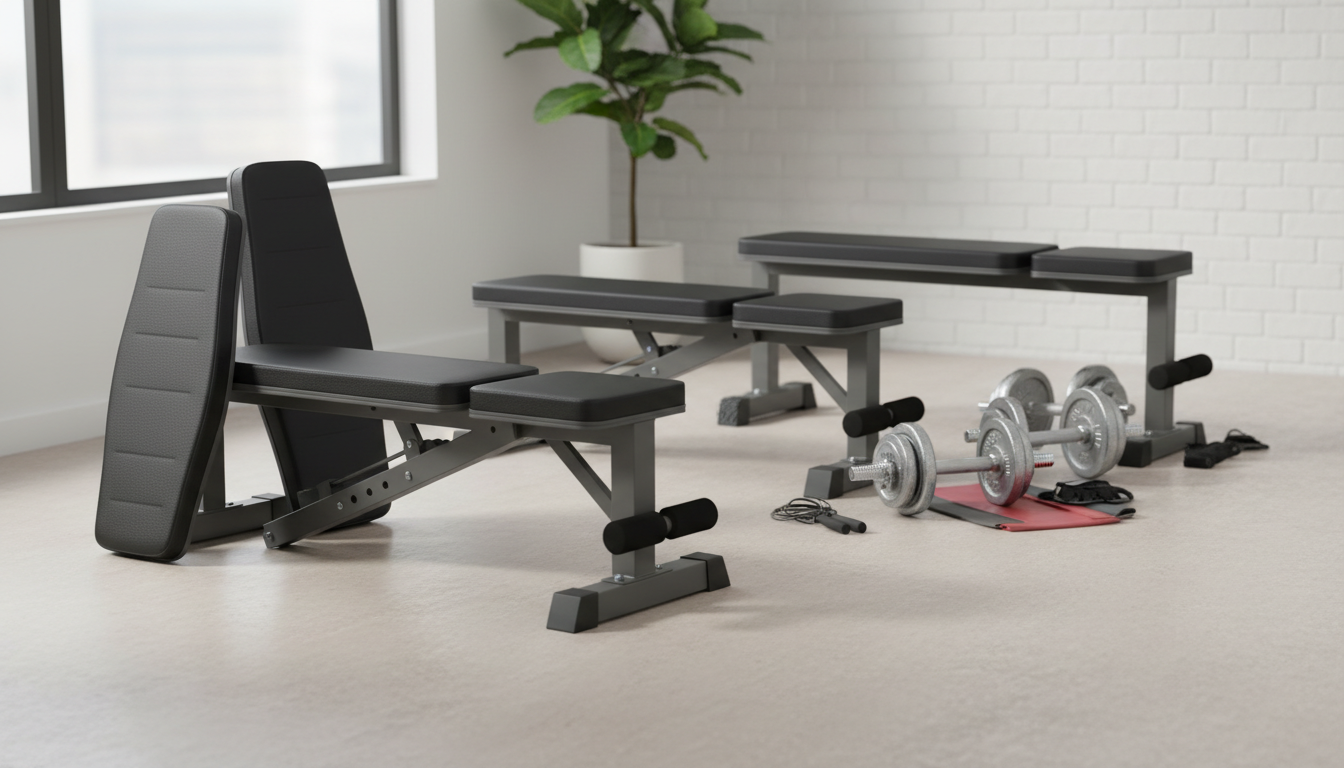
The best small-space option is usually a stable foldable bench or a compact adjustable model that stores easily without sacrificing too much support.